How to correct for wind in a holding pattern
By Rory Bennett (ATPL, FI: CPL, IR, ME, UPRT) · Published 25 May 2026
Direct answer
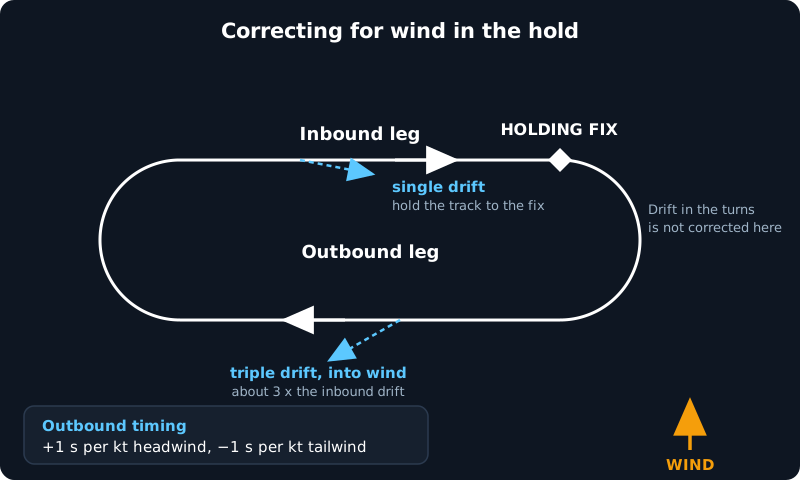
ICAO holding procedures require you to correct for wind in both heading and timing, so that you can regain the inbound track before the fix[1]. The standard method is to apply single drift on the inbound leg, then triple that drift, into wind, on the outbound leg to correct for the drift built up across both turns and the outbound leg, and to adjust the outbound time by one second per knot of headwind or tailwind[2].
Wind correction walkthrough
The walkthrough below flies the hold from end to end; the wind correction section comes later in the video. The full transcript is under the player for accessibility and search.
Video transcript
Why do you correct for wind in a hold?
ICAO requires you to make an allowance for the effect of wind, in both heading and timing, so that you establish the inbound track before passing the fix[1]. That is what keeps you inside the holding area and correctly positioned for any procedure that follows. The main objective of the outbound leg is to position the aircraft appropriately to intercept the inbound track.
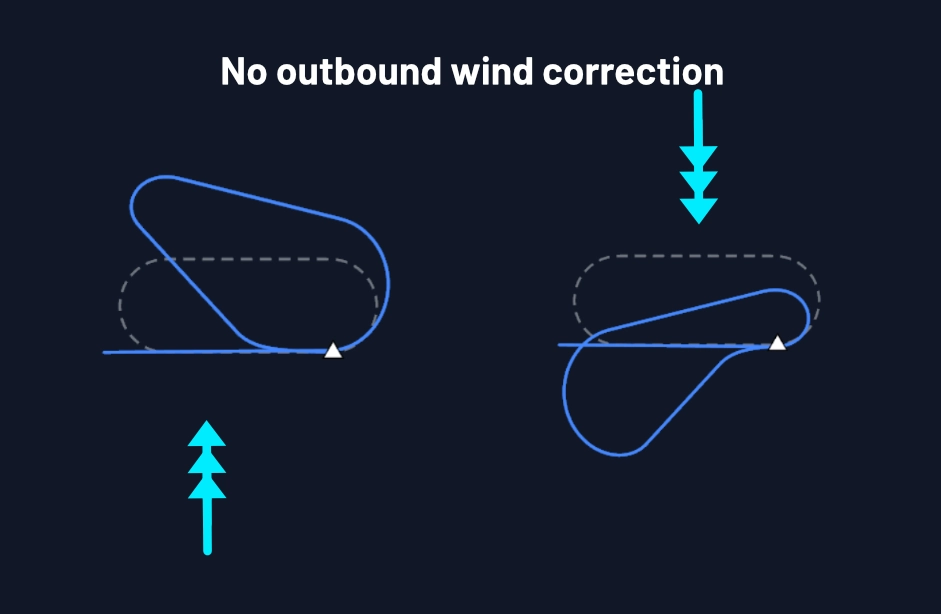
The difficulty is that a hold gives you only one tracked leg, the inbound leg, on which you can measure and correct drift. The outbound turn, the outbound leg, and the inbound turn together are roughly three minutes of flying that are all subject to drift, and you cannot easily correct drift while you are turning[2].
How do you find single drift?
Drift on the inbound and outbound legs is approximately equal[2], so you only need to measure it once. Find single drift either by the clock code, or simply by reading the difference between your heading and your track while you are established on the inbound leg.
Watch: Clock Code
Watch: Wind Corrections on the HSI
Why apply triple drift outbound?
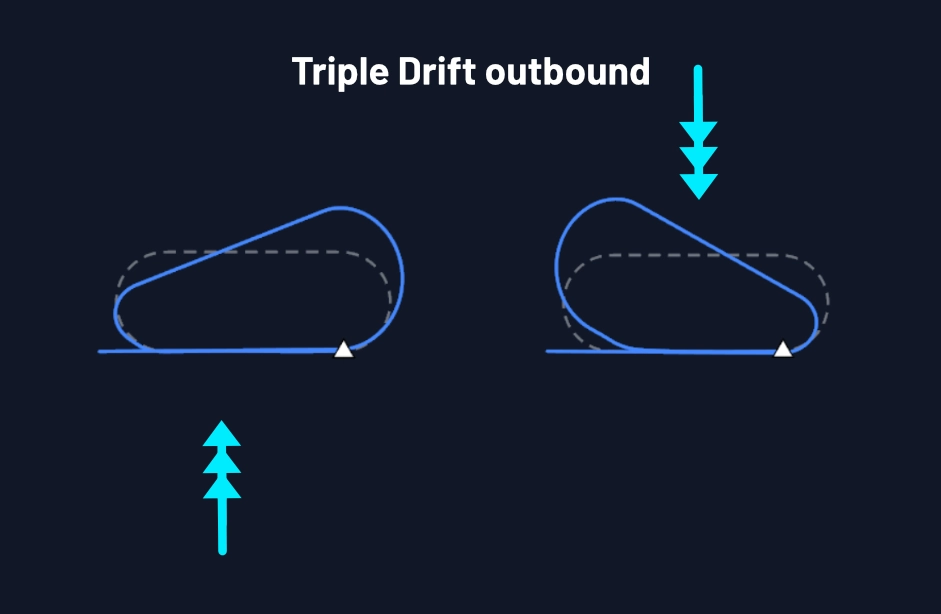
You have about three minutes of drift to correct for (outbound turn, outbound leg, inbound turn) and only the one-minute outbound leg in which to correct it. So one solution is to apply triple the drift angle on that single leg, into wind[2]. The outbound leg is then spent tracking into wind, undoing the drift from the stretched or compressed turns, and the leg itself.
- Find single drift on the inbound leg.
- Multiply by three to get triple drift.
- Apply triple drift into wind on the outbound heading.
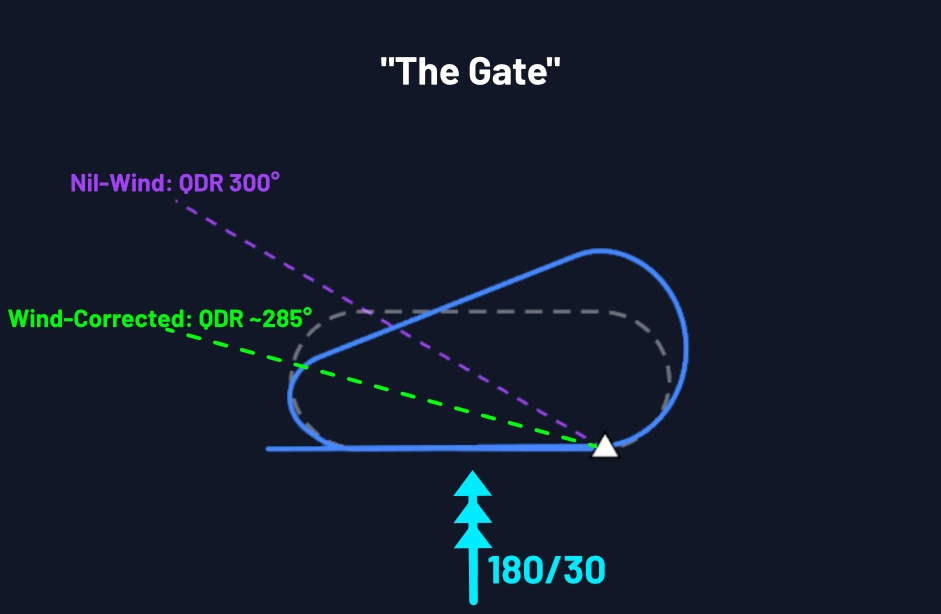
One side effect worth knowing: the gate (the QDR 30° from the hold axis) moves into wind by approximately single drift, so do not expect to find it on its nil-wind bearing[2].
How do you correct the timing?
The heading correction is primarily aimed at giving a suitable length inbound leg to the fix. Under ICAO, there is no strict timing requirement. Some people opt to aim for 3 minutes from the abeam position to the fix.
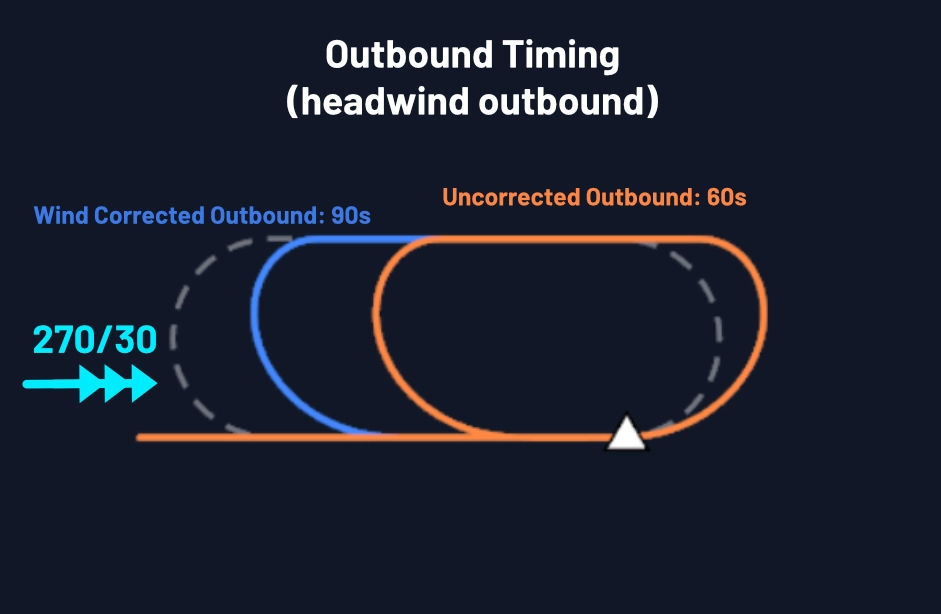
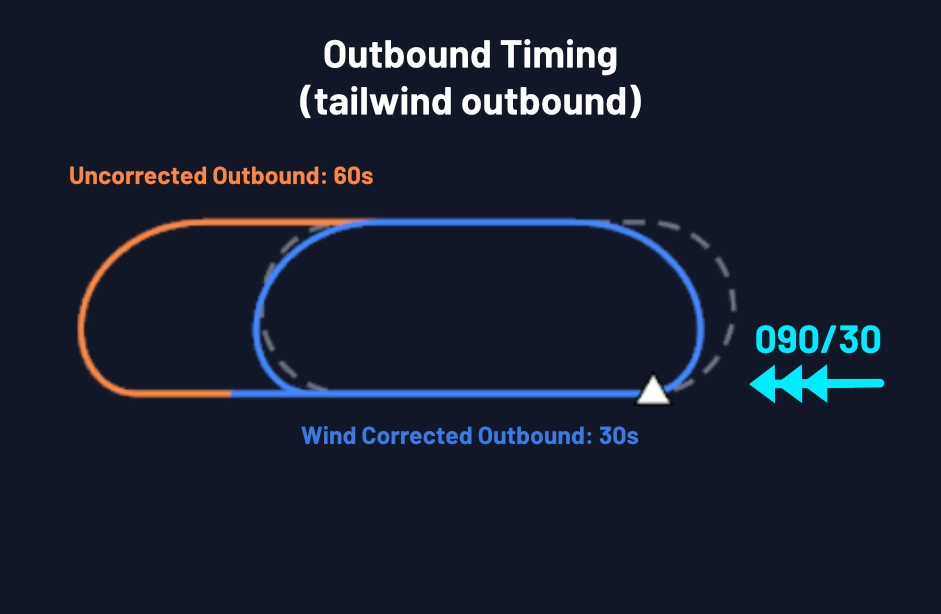
A good rule of thumb: Adjust the outbound time by one second per knot of headwind or tailwind on the outbound leg: add time for a headwind, reduce it for a tailwind[2].
When do you reduce to double drift?
There is one popular exception to the triple-drift rule. If your triple-drift corrected outbound heading falls within 30° of the wind, consider reducing to double drift instead[2].
Worked examples
Both examples use the figures from the walkthrough video. The first is fully worked; in the second, work out the answer before you reveal it.
Setup: left-hand hold, inbound track 360°, 120 kt true airspeed, wind from 090° at 15 knots[2].
- On the inbound leg, hold the track to the fix and read the drift. Single drift is about 7.5°.
- Triple it: 3 × 7.5° 22°.
- The outbound heading in nil wind is the reciprocal of the inbound, 180°. Apply the 22° into wind (toward 090°): 180° − 22° = 158°.
- Heading 158 is 68 degrees from the wind, so the wind is 22 degrees from the wingtip, meaning about a third of the wind is a headwind - 5 knots. The wind corrected outbound heading experiences a headwind of about 5 knots.
Answer: fly an outbound heading of about 158° for about one minute and 5 seconds.
Now one for you. Read the setup, work out the outbound heading and time, then reveal to check.
Setup: left-hand hold, inbound track 090°, wind from 310° at 30 knots. On the inbound leg you read 10° of drift.
Question: what is the outbound heading, and roughly what outbound time?
Show the answer
Triple drift = 3 × 10° = 30°. The nil-wind outbound heading is the reciprocal of 090°, so 270°. Applied into wind (toward 310°), the triple-drift heading would be 270° + 30° = 300°.
But 300° is within 30° of the wind (310°), so reduce to double drift (20°): outbound heading = 270° + 20° = 290°.
With a headwind component on the outbound leg, the time is lengthened to about 1 minute 28 seconds. Had you kept the full triple drift, you would have ended up wide and had to correct back[2].
Where to go next
Wind correction applies on the entries, too. If you are still learning the entries, start with how to determine hold entry. To experiment with different wind corrections, dial a wind into the Hold Visualiser and see how different winds, headings and times work out instantly.
Common mistakes
- Applying single drift outbound using track diamond or similar Remember you are not trying to track the inbound reciprocal, you are making an additional correction into wind - triple drift.
- Not adapting for changing conditions These calculations are a rule of thumb, monitor how your headings and timings work and adjust them for subsequent holds.
- Applying wind correction in the wrong direction. Do a gross error check on turning outbound. Look at the known wind direction on the HSI or DI, is your heading towards this from the nil-wind outbound HDG?
Practise this in the simulator
Reading the theory only goes so far. The simulator lets you fly the scenario in your browser with realistic instruments and wind.
Check your understanding
Read each question, work out the answer in your head, then reveal to check. Retrieval beats re-reading.
Show answer
Show answer
Show answer
Frequently asked questions
Why apply triple drift on the outbound leg?
A hold has one tracked leg (the inbound) on which drift can be assessed and corrected. The outbound turn, outbound leg, and inbound turn together make up approximately 3 minutes of flying subject to drift. Drift in the turns cannot easily be corrected, so the correction is concentrated on the 1-minute outbound leg by applying triple the drift angle.
How do you find single drift in a hold?
Drift on inbound and outbound legs is approximately equal. Use the clock code to calculate drift from the known or estimated wind, or simply look at the difference between heading and track when on the inbound leg.
How do you correct the outbound timing for wind?
Adjust outbound time by 1 second per knot of head or tailwind. Add time for a headwind on the outbound, reduce time for a tailwind.
When do you reduce from triple drift to double drift?
If the triple-drift corrected outbound heading falls within 30° of the wind, consider reducing to double drift.
What happens to the gate when correcting for wind?
The gate (a QDR 30° from the hold axis) moves into wind by approximately single drift.
Sources
- International Civil Aviation Organization, Procedures for Air Navigation Services: Aircraft Operations (PANS-OPS), Doc 8168, Volume I, Flight Procedures, Part I, Section 6, Chapter 2 (Holding) 2.3.2. The provisions requiring an allowance for the effect of wind on both heading and timing so the aircraft regains the inbound track before reaching the fix. Not freely distributable; cited by document number and section.
- Good Flying Made Easy, Holding: ICAO PANS-OPS (instructional video). Source for the triple-drift method, the one-second-per-knot timing correction, the reduce-to-double-drift case, and the two worked examples. youtube.com/watch?v=3ux5d7xAg3Y
Related articles
This article does not constitute flight instruction. Always defer to the guidance of your qualified flight instructor and to current charts and procedures or regulations published by your country's aviation authority.
© 2026 RHBA Radio Navigator. All rights reserved.